


When I thought about historical bad girls, the subject of this week’s blog, my mind immediately jumped to the rebel girl who dared to step outside society’s boundaries and ask “why not?” To me, these girls are the pathfinders, the heroines, the founding sisters/mothers who blazed a path for us. I would not have the luxury of living a life of my own making were it not for the likes of such “bad girls” who risked everything to change the status quo.
These girls were often labeled bad because they dared to dream. When a man did such a thing, he was called brave, a hero, a pioneer. A female on the same path was branded a job stealer, traitor to her sex, masculine, screaming harridan, and worst of all: slut. It took a brave girl, a brave woman, to continue her quest under such labels. In the good old days, labels had ways of sticking, sometimes permanently.
When men through history fought for their rights they were lauded, but when women tried to do the same they were called hysterical. When the American colonists were taxed but not given representation in Parliament, the Revolutionary War was the result. Taxation without representation was tyranny. However, this did not apply to women. Women were required to pay taxes, but were denied the right to have a voice in the political process. In England, the fight for the vote began in 1865, and in American, 1848. Suffragists’ demand for the vote fell on deaf ears in both countries for a very long time.
Many suffragists in Great Britain grew weary of asking nicely and decided to change tactics. They felt because they were not considered full citizens they were not bound under the same laws as citizens. Emmeline and Christabel Pankhurst, the founders of the Women’s Social and Political Union, believed the only way forward was to become outlaws. In other words, make themselves martyrs to the cause.
On June 29th 1909, after suffragettes marched on Parliament, Emmeline Pankhurst struck a police constable to get arrested. Later that evening 108 women and 14 men were arrested for smashing windows at the Home Office, Treasury and Privy Council. In July, suffragettes poured ink and chemicals into a ballot box defacing the papers. They chained themselves to railings, threw roof slates at the Prime Minister’s car, flyposted propaganda, and heckled politicians. Later, the militancy increased to arson and defacing works of art. Hundreds of women (and even a few men) were arrested. When they protested through hunger strike, they were deemed mentally unstable and force-fed as a result. In 1913, Emily Wilding Davison stepped in front of the king’s horse, Anmer, in the Epsom Derby, in order to stop it and gain publicity, but the horse ran her over and she was killed.
In America, Alice Paul and Lucy Burns formed the National Women’s Party, and after picketing the White House in 1917 as “Silent Sentinels” they were arrested for obstructing traffic. They were sent to the Occoquan Workhouse in Virginia. Paul had lived in England, working with the WSPU, and she had been among those force-fed. She went on hunger strike in Occoquan, was diagnosed as mentally unfit, and was force-fed, this time on American soil.
American women were given the right to vote in 1920 when Woodrow Wilson signed the Nineteenth Amendment. British women over thirty years of age were given the right to vote in 1918; in 1928 the same rights as men (over the age of 21).
Hundreds and hundreds of “bad girls” dedicated their lives for women’s rights. And I, for one, am so grateful.
I’ve often wondered if I had what it took to be a bad girl if I were alive in the Edwardian era. Would I have fought as they did? I’d like to think I would. How about you?
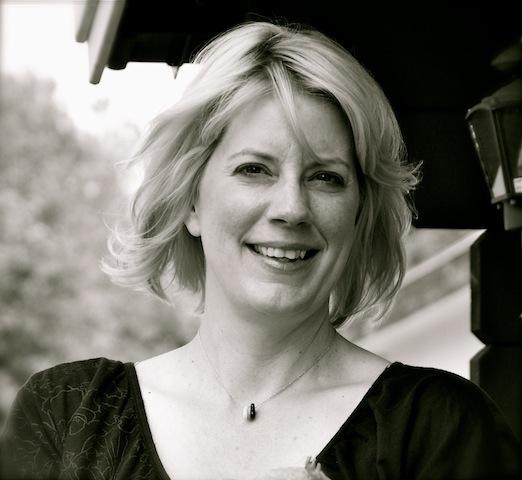
Sharon Biggs Waller is the author of A Mad, Wicked Folly, an Edwardian-era novel about a young artist finding her own way during the time of militant suffragettes (Viking/Penguin, Winter 2014). You can find her at www.sharonbiggswaller.com or on Twitter @sbiggswaller.